Have you ever noticed your shoulders drop after the din of an air conditioner clicks off? Or maybe you’ve been sitting in what you thought was silence, then some kind of far off machinery powers down and you realize there hadn’t been silence at all? We can function through layers of friction, but by definition, they don’t make a situation easier. Our brains and bodies compensate and absorb and rearrange for it, and often that all happens unconsciously.
Storytelling opportunities soldier on through every kind of friction — rain or shine. On this day, we were working at the Alpine venue in Cortina, Italy. It was the final days of the Paralympics in March of 2026, and we finally saw some real winter weather. We were glad for it.
But what goes along with that are added layers of friction. It’s okay. We can handle friction. My career as a journalist has always been a prime training ground for meeting friction with grace, meeting resistance with calm and for building resilience. On this day, it looked like this: Working outside in snow mixed with rain. Bulky clothing. The fickleness of our comms. Standing right under a huge speaker. Trying desperately not to block anyone’s view. It was all going to be okay, but honestly, it was a little harder to move, a little harder to hear, and in a moment it would be a little harder for me to see too.
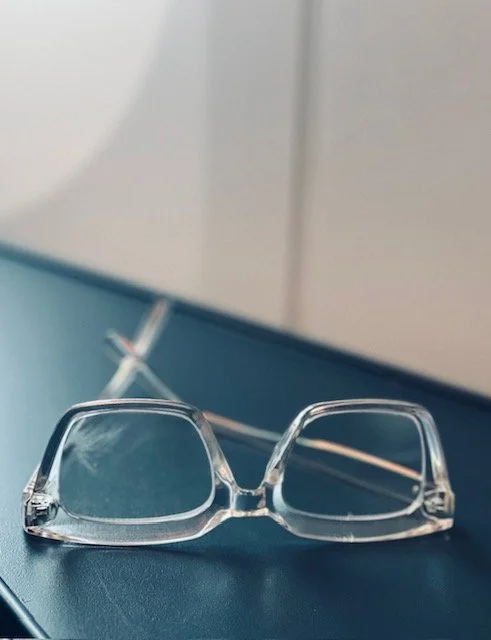
I heard my glasses hit the muddy metal bleachers. When I looked down, I noticed one lens had popped out, and my heart sank a little. There was a lot of day ahead of me, and I’d forgotten to pack a spare pair to the mountain that morning. I always joke that I can see Cleveland from just about anywhere, but to read something near or small, I need my readers.
I stretched my leg out over the clear lens, kicking it out of the way with my boot. I bent to scoop up my frames and continued walking down the ramp to speak to a colleague. Onward. Moments later, someone tapped me on the shoulder from behind. I turned and looked up at a volunteer wearing a neon reflector vest. He’d been right next to me in the congested little bottleneck when my glasses fell.
Tall and thin, he extended his hand down from the ramp above and practically whispered, “Give me your glasses. I try to fix.” I didn’t know anyone had noticed what happened let alone cared. I reached into my pocket and gave him a wan smile. I said thank you as I handed him my frames — my gaze holding an extra moment to express my appreciation for his optimism. My posture lifted a little as he turned away. If my thinking said Hm, I wonder…. my feeling was hope.
I carried on with my business and soon walked back up the ramp. As I approached the volunteer’s post, he was smiling a half smile as he handed me my glasses. He said no words. Two lenses back in place. The only evidence of the spectacle debacle was the scraped lens from using my foot to slide it out of the way. All that I had on me to give him — in addition to my words of thanks and gratitude — was a Paralympic pin. Hopefully it felt like a form of payment since pins are sort of a form of currency at events like this.
Despite the continued forms of friction I described above, in that moment, I felt my shoulders drop a little. I gently exhaled. And everything felt a little easier.
I’ll be keeping these glasses as a memory of the power of a simple kindness. And of the angels among us.
When I see something, I want to be quicker to ask myself, can I do something?
Can I do something to make someone’s shoulders drop a little?